
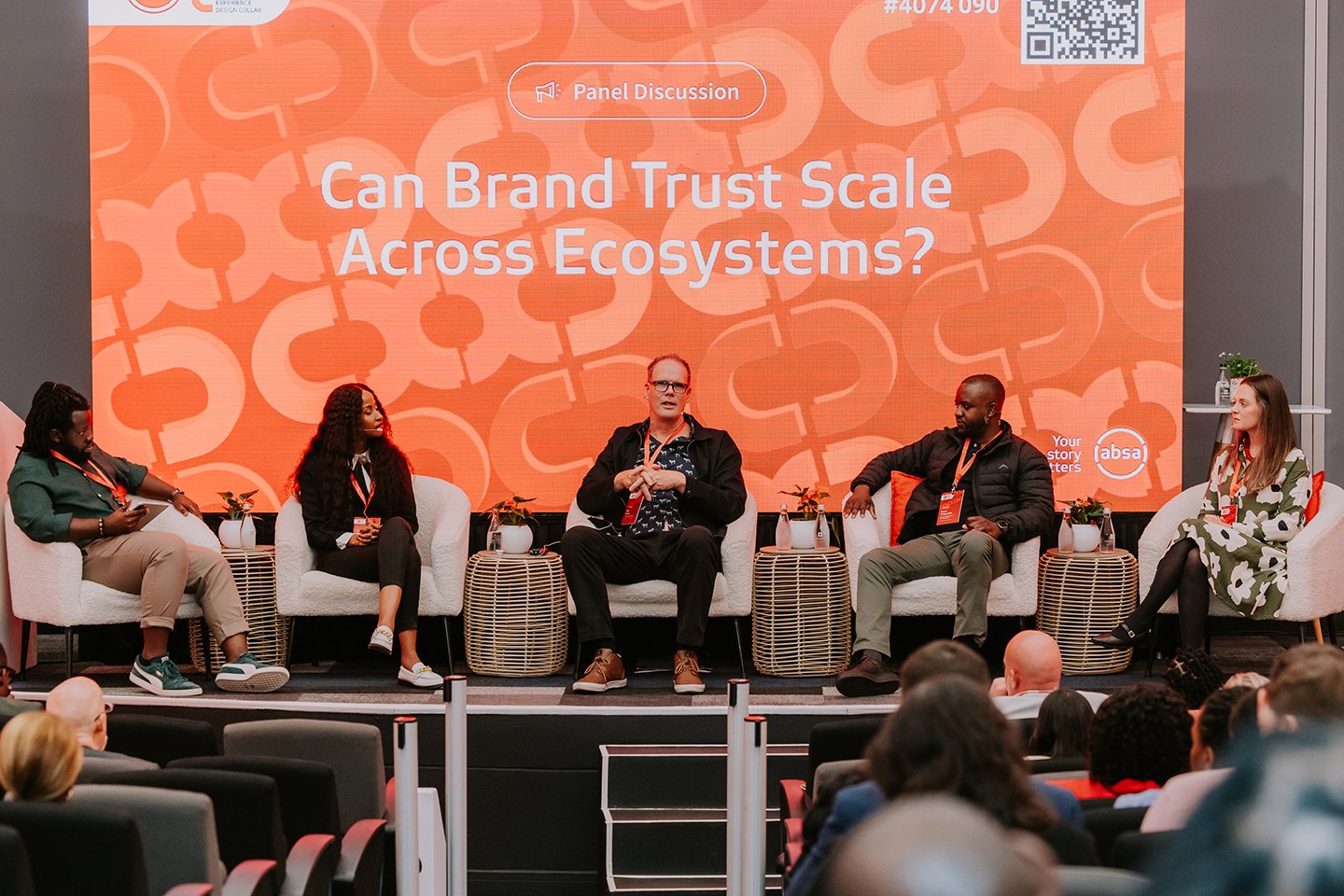
I was invited to take part in a panel discussion at this year’s Absa XDC conference, exploring the topic of how trust survives when multiple organisations contribute to a single customer experience.
As banks increasingly partner with fintechs and other specialist providers, one thing becomes critical: the customer shouldn’t have to understand how the ecosystem works.
We might know which organisation provides which part of a service, but the customer simply knows they’re using their bank.
And that creates an expectation: you know me.
We see this clearly when testing partner-integrated services. Success rates jump from around 10% to 70% when customers are able to select their accounts from a list, rather than entering their account details from scratch.
It sounds obvious. Customers are already inside the bank’s ecosystem. They expect us to know who they are and what accounts they have, regardless of which partner is powering the experience behind the scenes.
The same principle applies to forms, documents and personal information. If a customer has already given information to the bank, asking for it again creates friction.
Our job is to absorb the complexity rather than pass it on to the customer.
But there’s another side to partnership.
When a bank introduces a partner, it lends some of its credibility to that organisation. The customer thinks: “My bank trusts these people enough to work with them, so I’m comfortable taking the next step.”
That makes partner selection only the beginning.
Trust has to be designed across the entire experience: how the service is introduced, what we explain, how information moves between organisations, how reliably the product works and, most importantly, what happens when something goes wrong.
Fixing technical issues is relatively easy. Rebuilding trust is much more difficult.
Our front-line colleagues trust us to design products that they feel comfortable selling. They know that if something goes wrong, customers will raise it with them.
This highlights something important: there isn’t just one relationship of trust. There’s a chain.
In our case: Business to Design to Front-line Colleague to Customer.
Break trust anywhere in that chain and the effects travel downstream.
That’s particularly important when designing at scale. Scale is a double-edged sword: you can succeed at scale, but you can also fail spectacularly at scale.
It’s also why an MVP cannot be an excuse for something fundamentally unreliable. Customers and colleagues may only give a new proposition one chance.
The final lesson I’ve learned about partnerships is that we usually choose external partners because they can do something we can’t, or because they have deep expertise in an area we don’t.
We need to be careful not to partner with them and then constrain them with our own processes, frameworks and ways of work so that they can no longer do the thing we partnered with them to do.
The best ecosystems combine the strengths of both organisations, while making the complexity between them invisible to the customer.
Trust can scale across an ecosystem only if we choose partners carefully – and then earn the customer’s confidence together.
The bank’s reputation might give someone the trust to try a partner’s service.
What we deliver together determines whether they keep it.
